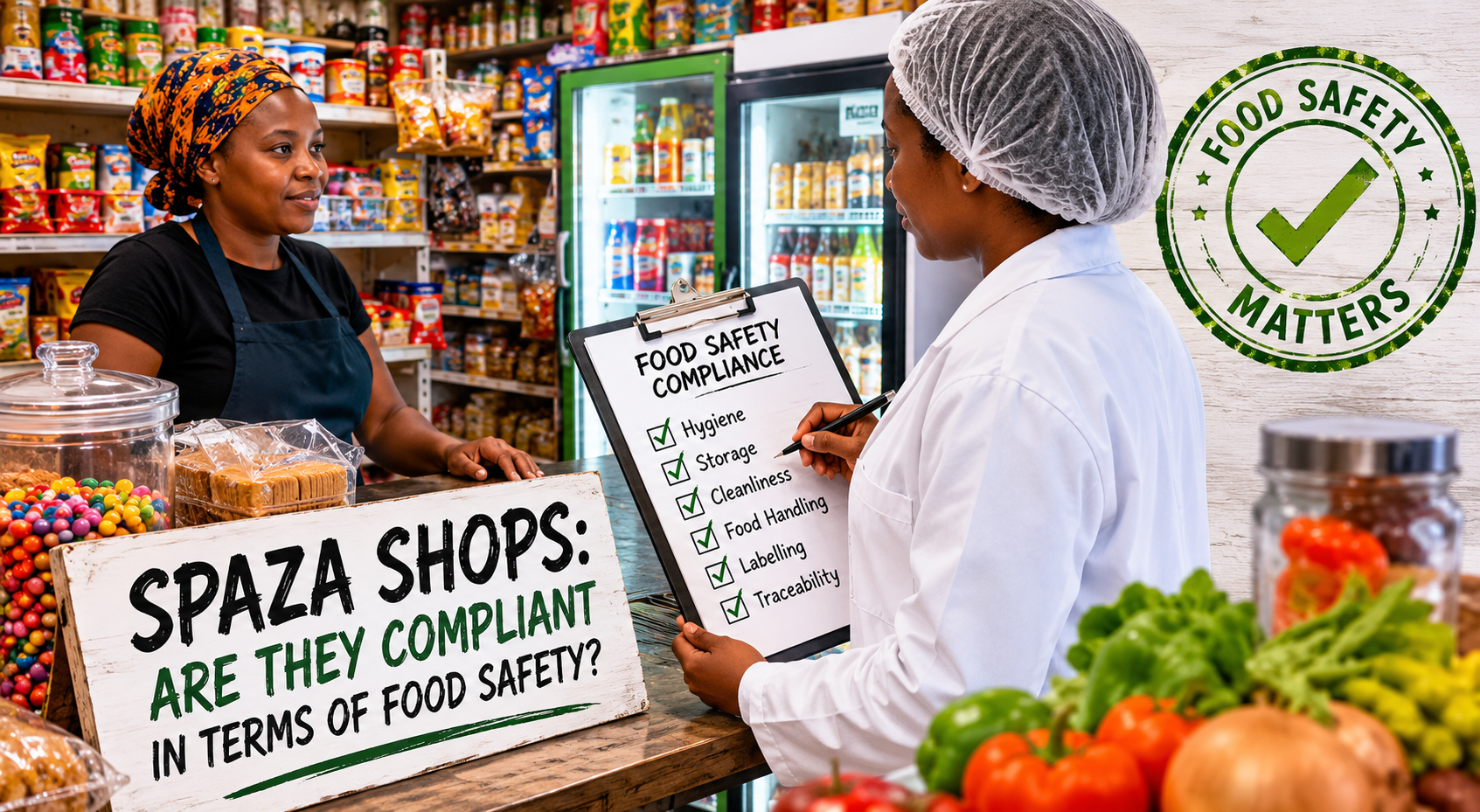
The February 2025 deadline has passed. Thousands of spaza shop owners across South Africa rushed to register their businesses with their municipalities — and many breathed a sigh of relief when they received their confirmation.
But here is the truth that many business owners don’t yet know:
Registration was only Step One.
And Step Two — actual food safety and health compliance — is where businesses are being closed down, fined, and in serious cases, facing criminal charges. Enforcement is ongoing, active, and showing no signs of stopping.
If you registered your spaza shop but haven’t addressed your food safety obligations, you are still at risk. This article is for you.
What Happened — and Why It Changed Everything
In November 2024, President Cyril Ramaphosa addressed the nation following a devastating outbreak of foodborne illnesses across South Africa. Over 890 cases were recorded and nearly 30 people lost their lives — including six primary school children from Naledi, Soweto, who died after consuming snacks from a local spaza shop.
The President acted swiftly, directing all spaza shops and food handling facilities to register with their municipalities within 21 days. The deadline was later extended to 28 February 2025 — and the government made clear there would be no further extensions.
But even as registrations were being processed, the government drew a critical distinction that every food business owner needs to understand.
Two Processes. Two Obligations. Both Are Compulsory.
The Department of Cooperative Governance and Traditional Affairs was clear:
“We are dealing with two distinct processes. The first is business compliance — registering the spaza shop or food handling business. The second is compliance with health regulations. This process does not depend on whether you are registered or not. If you don’t comply with the health regulations, the business is closed down immediately.”
That is not a warning. That is a policy already being enforced. Over 1,000 spaza shops were closed during the initial registration period alone.
Process 1 — Business Registration (Municipal Compliance)
- Register your business with your local municipality
- Submit certified copies of your ID, proof of residence, and business name reservation certificate
- Obtain your municipal trading licence or permit
Process 2 — Health & Food Safety Compliance (Ongoing)
- Obtain a valid Certificate of Acceptability from your municipality
- Meet all hygiene and food handling standards
- Ensure premises are free of hazardous chemicals, banned substances, and pesticides
- Comply with national food safety regulations and municipal by-laws
- Submit to inspections by Environmental Health Inspectors at any time
Registration gives you permission to apply for a licence. Compliance is what allows you to keep it.
What Does Food Safety Compliance Actually Mean in Practice?
This is where many spaza shop owners feel lost — not because they don’t care, but because no one has explained it clearly.
Here is what compliance with food safety regulations typically requires for a food handling business:
Your Premises
- Clean, maintained food preparation and storage areas
- Proper ventilation, lighting, and drainage
- Pest control measures in place
- Separate storage for food and non-food items
- No expired, contaminated, or unlabelled products on the shelf
Your Food Handling Practices
- Safe food storage temperatures (cold chain compliance)
- Correct handling procedures to prevent cross-contamination
- Proper waste management and disposal
- Regular cleaning and sanitation schedules — documented
Your People
- Food handlers trained in basic food hygiene
- Personal hygiene standards enforced (handwashing, protective clothing)
- Staff aware of what to do in the event of contamination or illness
Your Documentation
- Records of cleaning, temperature checks, and supplier deliveries
- Supplier verification — knowing where your products come from
- Certificates and permits up to date and displayed
This might sound overwhelming. It doesn’t have to be. With the right guidance, most spaza shops can achieve and maintain compliance — and in doing so, build a reputation that earns customer trust and keeps their doors open.
The Opportunity Hidden Inside the Regulation
Here is a perspective shift worth considering.
The businesses that comply don’t just avoid closure. They gain a competitive advantage. Customers who have been scared by the news coverage are now paying attention to which shops look clean, which ones feel safe, which ones they can trust.
A compliant, certified spaza shop stands out in its community. It builds loyalty. It attracts better suppliers. It positions itself for the R500 million government support fund established through the Department of Trade, Industry and Competition — money specifically earmarked to help South African spaza shop owners grow, formalise, and operate sustainably.
Compliance is not just protection. It is positioning.
How Vandor Consulting Supports Spaza Shop and Food Business Owners
At Vandor Consulting, we understand that most small business owners did not study food safety legislation. That is our job. Yours is to run your business.
We offer practical, affordable support designed specifically for SMMEs and food handling businesses navigating these new requirements:
Compliance Assessment — We assess your current operations against the applicable food safety and health regulations and identify exactly what needs to be addressed.
Food Safety System Development — We help you put the right systems, records, and procedures in place — practical and appropriate for your business size.
Training & Capacity Building — We train you and your staff on food hygiene, safe handling practices, and what inspectors look for.
Regulatory Readiness — We prepare you for Environmental Health Inspector visits, help you obtain your Certificate of Acceptability, and ensure your documentation is in order.
Business Registration Support — If you are still navigating the municipal registration and trading licence process, we walk you through it step by step.
We don’t offer complicated solutions designed for large corporations. We offer clear, practical, results-driven support that works for real businesses run by real people.
Don’t Wait for an Inspector to Find the Problem
The enforcement teams are not going away. NATJOINTS has confirmed zero tolerance for non-compliance, with multi-disciplinary enforcement — law enforcement and Environmental Health Inspectors — continuing across the country indefinitely.
The question is not whether your business will be inspected. The question is whether you will be ready when it is.
If you are unsure whether your spaza shop or food business is truly compliant — not just registered, but compliant — reach out to us today. The first conversation is free.
Dr. Vanessa Green is the Founder and Lead Consultant of Vandor Consulting, a strategic consulting firm specialising in food safety, quality management, business development, and regulatory compliance. With a PhD focused on SMMEs and extensive international experience across the food and consumer goods industry, Dr. Green brings practical, expert guidance to businesses of every size across South Africa and beyond.
📧 info@vandorfoodconsulting.com 🌐 www.vandorfoodconsulting.com 📞 +27 71 227 7967
© 2026 Vandor Consulting. All rights reserved.